
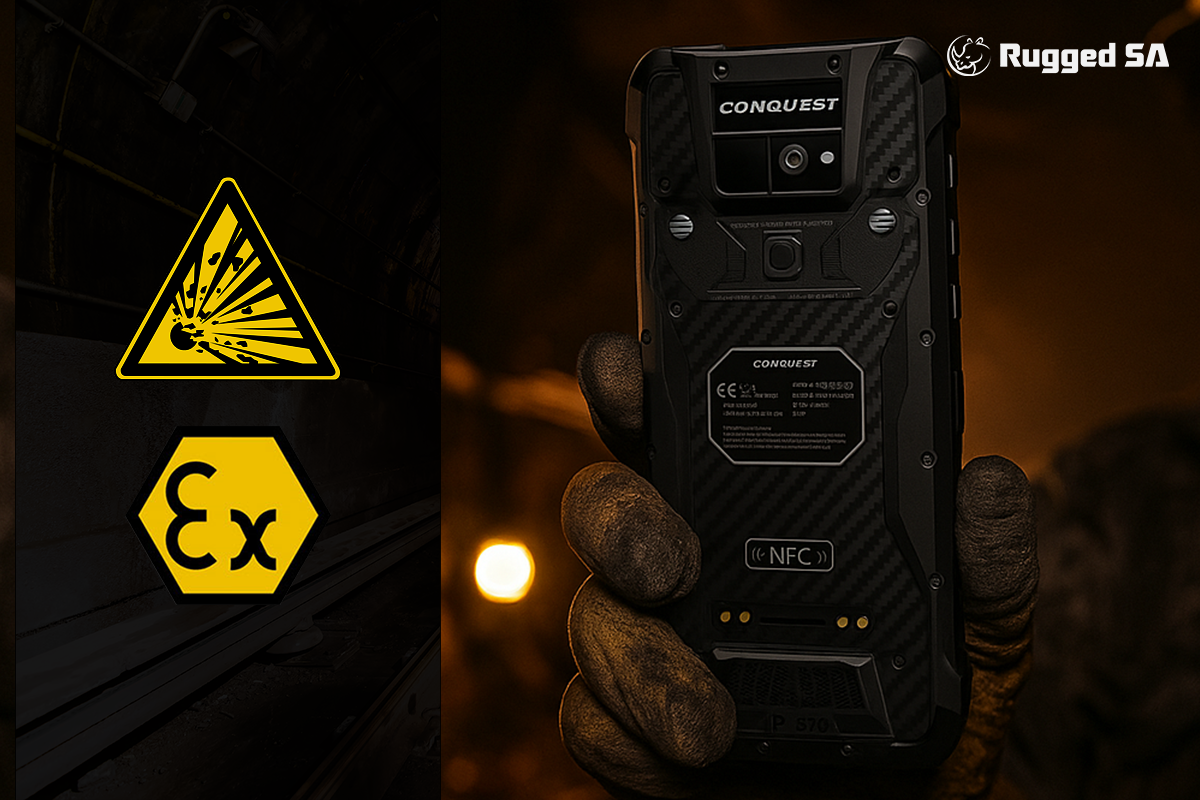
Why Device Safety Matters in Mining
Mining environments are among the most demanding workplaces in the world. Workers may operate around combustible gases, vapours, dust, extreme temperatures, moisture and heavy machinery. In these conditions, choosing the right technology is about more than durability. It can be a critical safety decision.
For modern mining operations, rugged devices are increasingly used for communication, inspections, reporting, navigation and data collection. However, a device being rugged does not automatically mean it is safe to use in a hazardous area.
This is where intrinsically safe devices and certifications such as ATEX and IECEx become important.
Rugged vs. Intrinsically Safe: What Is the Difference?
What Is a Rugged Device?
A rugged smartphone, tablet or handheld device is designed to withstand demanding working conditions. Depending on the model, it may offer protection against drops, water, dust, vibration and extreme temperatures.
This makes rugged technology valuable across construction, logistics, utilities and mining.
However, ruggedness mainly addresses physical durability. A rugged device may survive a drop or exposure to water while still producing electrical energy, heat or sparks that could create a hazard in an explosive atmosphere.
What Does Intrinsically Safe Mean?
Intrinsically safe technology is specifically designed and certified to prevent electrical equipment from becoming an ignition source in hazardous environments.
The design limits electrical and thermal energy so that the device cannot produce enough energy under specified conditions to ignite gases, vapours or combustible dust.
For mining operations where hazardous substances may be present, this distinction is essential. A device can be extremely durable without being suitable for every hazardous zone.
Understanding ATEX and IECEx Certifications
What Is ATEX?
ATEX is a European regulatory framework covering equipment intended for use in potentially explosive atmospheres. ATEX certification helps identify whether equipment meets the required safety standards for specific hazardous environments.
For companies operating in mining or supplying equipment to European markets, understanding ATEX classifications is important when selecting mobile technology for hazardous areas.
What Is IECEx?
IECEx is an international certification system based on International Electrotechnical Commission standards for equipment used in explosive atmospheres.
IECEx certification provides a recognised approach to demonstrating that equipment has been assessed for use in hazardous environments.
For global mining companies and heavy-industry organisations, IECEx can simplify the process of evaluating equipment for operations across different markets.
Why This Matters for Mining Operations
Mining sites can include areas where combustible gases or dust are present. Using standard consumer electronics in these environments may introduce unnecessary risks.
When selecting technology for mining teams, organisations should consider more than drop resistance or waterproofing. The equipment should be evaluated according to the specific hazardous-area requirements of the site.
Key Factors to Consider
Before deploying mobile devices in mining environments, businesses should consider:
- Hazard classification: Understand the gases, vapours or dust that may be present.
- ATEX or IECEx certification: Verify that the device has the appropriate certification for the intended environment.
- Ingress protection: Look for suitable resistance to dust and water.
- Durability: Consider drops, vibration, temperature and harsh working conditions.
- Battery and charging requirements: Confirm that charging procedures are appropriate for the working environment.
- Operational needs: Ensure the device supports communication, documentation, inspections and other workflows.
Choosing the Right Technology for Mining
The right technology depends on the environment and the job. A standard rugged smartphone may be suitable for many demanding industrial applications, but hazardous areas require additional consideration.
For mining businesses, the goal should be to balance durability, safety, functionality and compliance. Understanding the difference between rugged and intrinsically safe equipment allows decision-makers to choose technology based on the actual risks present on site.
Whether workers need smartphones for inspections, tablets for reporting or mobile devices for communication, certification should never be treated as an optional feature when operating in potentially explosive environments.
Conclusion
Technology is transforming mining by helping teams communicate faster, collect data and improve operational efficiency. But technology must be appropriate for the environment in which it is being used.
Rugged devices provide valuable protection against the physical challenges of mining, while intrinsically safe devices are designed to address ignition risks in hazardous areas. ATEX and IECEx certifications provide important guidance when evaluating equipment for these conditions.
For mining and heavy-industry organisations, understanding these differences is an essential step towards making safer and more informed technology decisions.
For more information visit our Linkedin page 👉 https://www.linkedin.com/company/rugged-sa
Shop now 👉 https://www.ruggedsa.co.za